
Microfibrillated Cellulose (MFC)
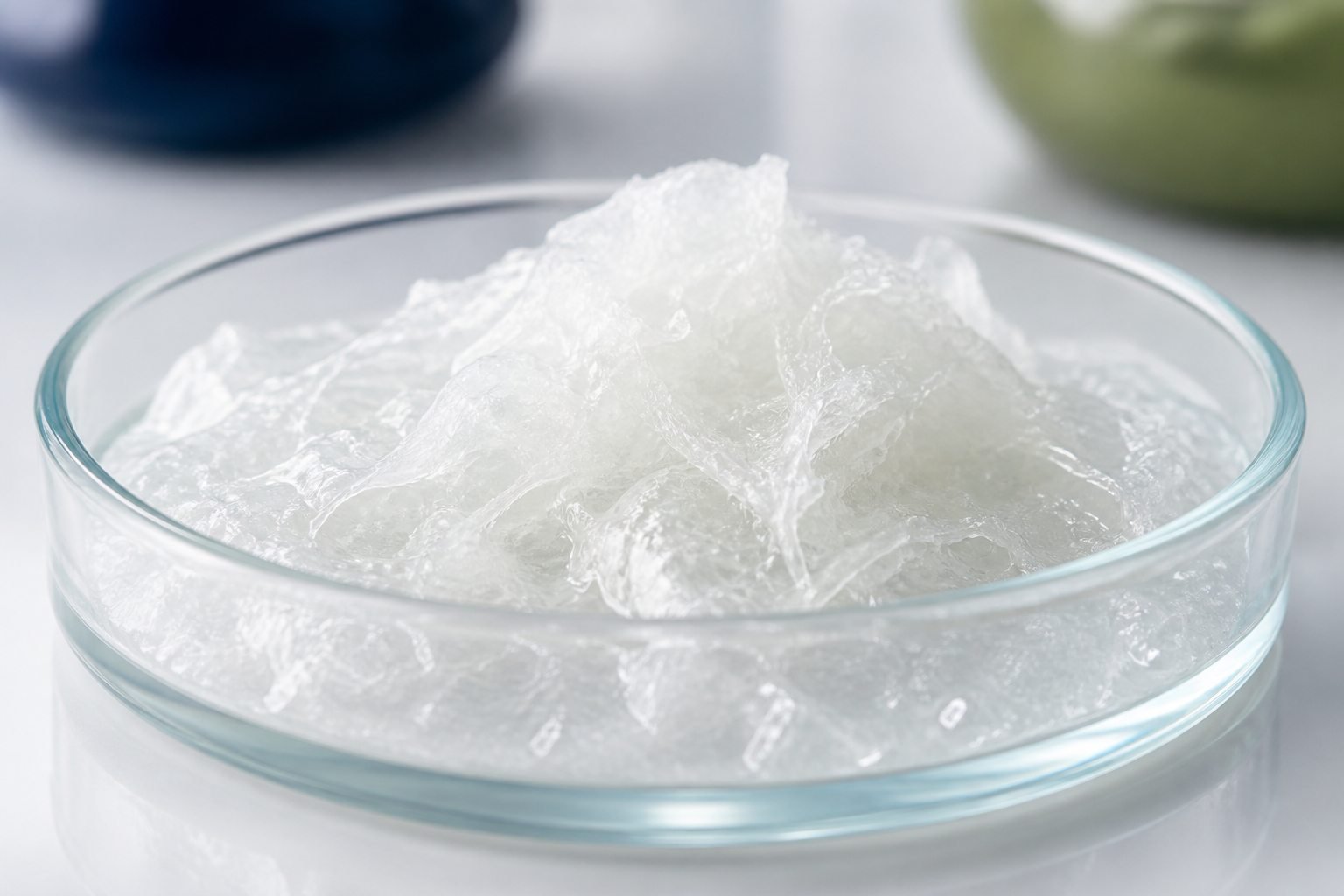
An advanced bio-based material produced by mechanically fibrillating natural cellulose fibers into an interconnected microfibrillar network structure.
Typical specifications
- Structure
- Microfibrillar network
- Behavior
- Shear-thinning
- Profile
- High surface area
- Role
- Rheology & stabilization
Technical overview
What is Microfibrillated Cellulose (MFC)?
Unlike conventional cellulose powders, MFC consists of extremely fine cellulose fibrils with very high surface area and strong interaction with water and surrounding particles. This unique fibrillar structure forms a three-dimensional network that provides multifunctional performance in liquid, semi-solid and solid systems.
Functions as
- Rheology modifier
- Stabilizer
- Suspension aid
- Reinforcement additive
- Water management agent
- Film-forming support material
Performance outcomes
- Anti-settling performance
- Moisture retention
- Crack resistance
- Barrier properties
- Texture and consistency
- Formulation homogeneity
Performance
Shear-thinning behavior that works in process
One of the key advantages of MFC is its shear-thinning behavior. The fibrillar network provides high viscosity and excellent stability at rest, while allowing easy pumping, spraying and application under shear. After application, the structure rapidly rebuilds itself, improving sag resistance, suspension stability and process performance.
- High viscosity at rest
- Easy pumping and spraying under shear
- Rapid structure rebuild
- Improved sag resistance
- Stable suspension performance
- Effective across varying pH and salt conditions
Applications
Where MFC delivers value
Due to its exceptional rheological and stabilization properties, MFC is widely used as a bio-based additive across demanding formulation systems.
Coatings & adhesives
Rheology control, suspension stability and film-forming support in liquid systems.
Construction chemicals
Stabilization and water management in mineral and dispersion-based systems.
Paper & packaging
Strength, bonding and barrier contribution in paper and board matrices.
Drilling fluids
Rheology and stabilization support in water-based fluid systems.
Agriculture
Film forming, binding and suspension performance in seed and crop systems.
Personal care
Texture, consistency and formulation homogeneity in care products.
Explore more
Related pages

Let’s develop better industrial solutions together.
Talk to a Fiber Kimya specialist about your application — most enquiries receive a technical response within 24 hours.